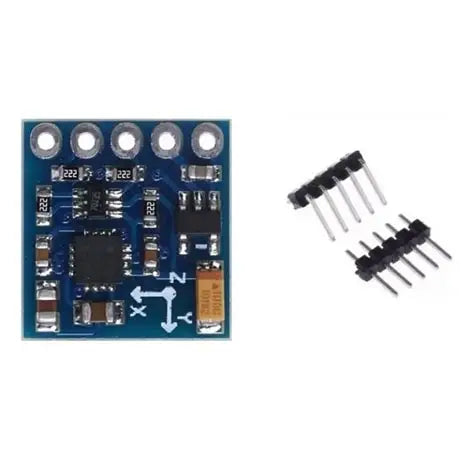


GY-271 HMC5883L 3-Axis Compass Magnetic Sensor
GY-271 HMC5883L 3-Axis Compass Magnetic Sensor
SKU:VT00759
Share
35 in stock
Couldn't load pickup availability
The GY-271 HMC5883L 3-axis Electronic Compass Module is a compact and precise magnetic field sensor designed for low-field magnetic sensing applications. Built around the original HMC5883L chip, this module provides accurate digital heading information through a simple I2C interface, making it ideal for robotics, UAVs, navigation systems, and orientation detection projects.
The sensor measures magnetic fields along three axes (X, Y, and Z) and converts them into digital output data. These values can be processed by a microcontroller to calculate heading direction, detect orientation changes, or measure magnetic field strength from different directions. This makes it highly suitable for drone stabilization, robot navigation, electronic compasses, and motion tracking systems.
The module comes mounted on a small breakout board that simplifies integration with platforms such as Arduino, Raspberry Pi, STM32, AVR, PIC, and other microcontrollers. Its compact size allows it to fit easily into space-constrained projects such as multirotor drones and small robotic platforms.
The board typically communicates over the I2C protocol, requiring only SDA and SCL lines along with power and ground connections, enabling quick and simple interfacing.
Note: This product may be supplied as HW-127, GY-127, or GY-271 variant boards depending on stock availability. The core functionality remains the same.
Features
The module provides 3-axis magnetic sensing for accurate compass functionality. It delivers precise digital heading information for navigation applications. Its compact design allows easy integration into UAVs, robotics, and embedded systems. The digital I2C interface ensures simple communication with most development platforms.
The GY-271 HMC5883L module is an excellent solution for developers and hobbyists who require reliable and accurate magnetic field sensing in navigation and orientation-based applications.